

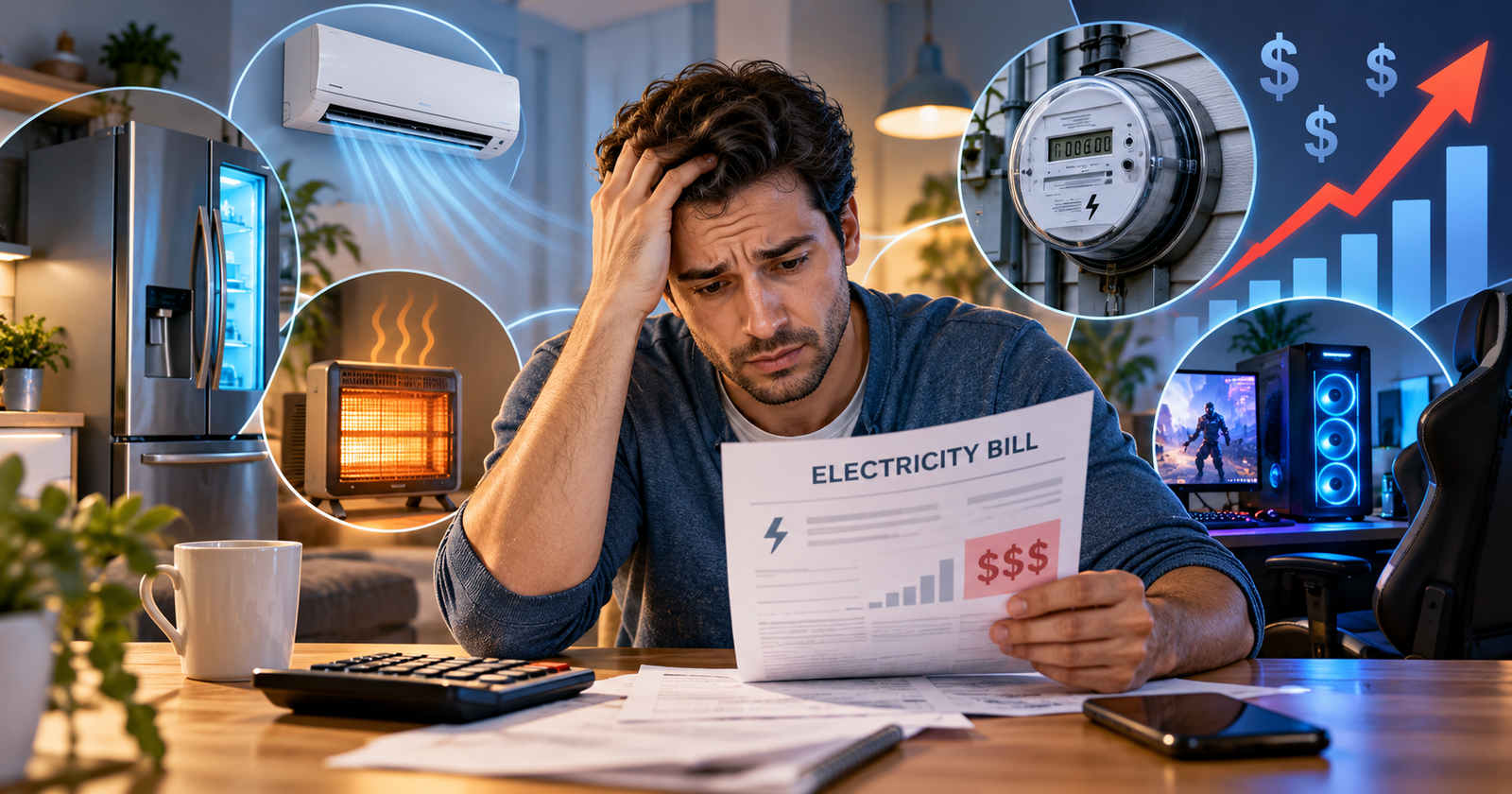
Imagine opening an electricity bill for $190 when your usual monthly payment is around $120. You have not purchased any new appliances, your household routine seems unchanged, and you cannot explain the additional $70. You might suspect your air conditioner, refrigerator, or gaming computer, but the actual reason could be a higher electricity rate, a change in billing slabs, an inaccurate meter reading, or increased household consumption that has gone unnoticed.
Many households ask the same question: “Why is my electric bill so high?” Finding the answer begins with identifying what actually changed. Electricity bills reflect both the amount of energy consumed and how the utility calculates the charges. Some increases can be controlled through simple household adjustments, while others require clarification from the electricity provider or professional technical assistance. Instead of immediately replacing appliances or reducing essential comfort, the smarter approach is to examine the bill, investigate major electricity users, and prioritize improvements that offer measurable benefits.
Why Is My Electric Bill So High When My Usage Seems Unchanged?
Electricity bills generally contain three major components: the amount of electricity consumed, the rate charged for that consumption, and additional fees or adjustments. A change in any component can increase the final bill, even when daily household activities appear similar.
According to the US Energy Information Administration (EIA), electricity consumption is measured in kilowatt-hours (kWh). One kilowatt-hour represents the energy used by a 1,000-watt appliance operating for one hour. Understanding this measurement helps distinguish between higher energy consumption and higher electricity prices. Before investigating individual appliances, compare your current bill with at least two previous statements. Examine the number of units consumed, the applicable electricity rate, the billing period, and additional charges.
| What changed? | Possible explanation | What to check |
| Higher kWh consumption | Increased appliance usage | Monthly units consumed |
| Higher electricity rate | Tariff revision | Price per kWh |
| Disproportionately higher bill | Billing slab or subsidy change | Tariff category |
| Additional charges | Taxes, fees, or adjustments | Itemized statement |
| Unexpected recorded consumption | Estimated reading or possible meter issue | Meter records |
For example, if monthly consumption rises from 400 to 500 kWh, electricity usage has increased by 25%. However, if the total bill increases by 40%, pricing changes or other charges may also be contributing. When someone asks, “Why is my electric bill so high?”, comparing electricity consumption with changes in tariffs, billing slabs, and additional charges is a useful first step toward identifying the explanation.
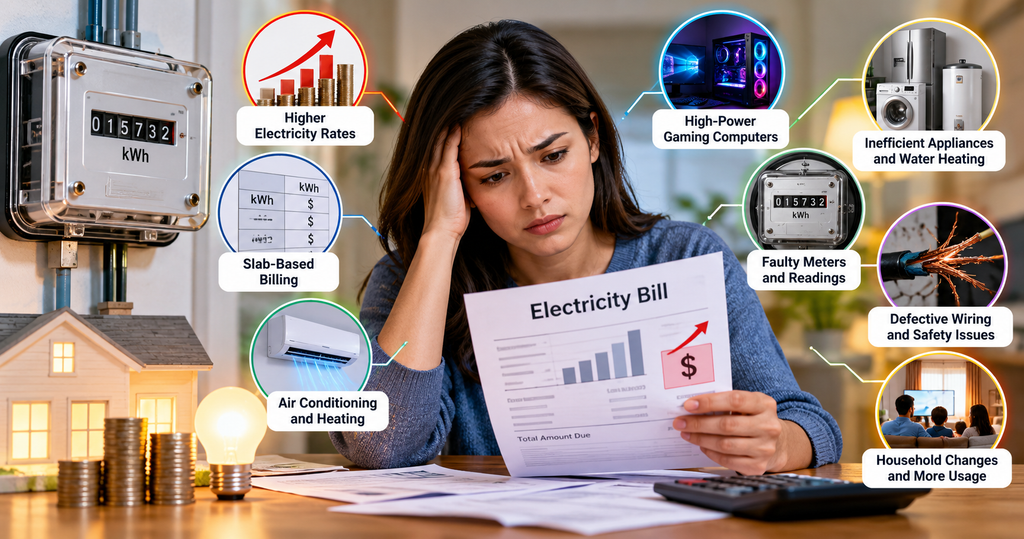
1. Higher Electricity Rates and Slab-Based Billing
Electricity costs can increase even when household consumption remains relatively stable. Providers may adjust tariffs because of fuel costs, infrastructure expenses, regulatory decisions, or other market conditions. Fixed charges, taxes, and time-of-use rates can further influence the total amount payable.
In many countries, slab-based electricity billing creates an additional challenge. Under a progressive block tariff, consumption is divided into ranges, with different prices applying to electricity used within each block. Some systems instead use consumption categories, subsidy thresholds, or other arrangements that can change the rates applied to a larger portion of usage.
Consider a simplified example with a hypothetical tariff charging $0.10 per kWh for the first 200 units and $0.20 for additional units. A household consuming 200 kWh would pay $20 in energy charges. At 220 kWh, the charge would rise to $24 because only the additional 20 units enter the higher-priced block.
Under a different hypothetical system, crossing 200 kWh might move the entire consumption amount into a category charged at $0.15 per kWh. In that case, 220 kWh would cost $33 instead of $24. Actual electricity tariffs may use more complex calculations, and this example is intended only to demonstrate why understanding the billing structure matters.
Consumers should review their applicable slabs, subsidy eligibility, fixed charges, and peak-hour pricing. Monitoring consumption becomes particularly valuable when a household is approaching a threshold that changes its tariff category or benefits.
2. Air Conditioning, Heating, and Poor Home Insulation
Heating and cooling systems can be among the largest contributors to household electricity consumption. During extreme temperatures, air conditioners and electric heaters may operate for longer periods to maintain comfortable indoor conditions. Poor insulation, dirty filters, inefficient equipment, and unwanted air leakage can increase the energy required.
The US Department of Energy explains that reducing air leakage and improving insulation can lower heating and cooling costs while making homes more comfortable. Appropriate thermostat settings, regular equipment maintenance, and effective insulation can help reduce unnecessary electricity consumption without sacrificing comfort.
Begin by checking air filters, ensuring cooling equipment operates properly, and inspecting accessible gaps around windows and doors. Curtains, shading, and weatherstripping may help manage indoor temperatures. Larger investments, including insulation improvements or equipment replacement, should be evaluated against installation costs and expected energy savings. As our article on the hidden costs of homeownership explains, utility expenses, maintenance, and unexpected repairs can significantly influence the overall cost of maintaining a property.
3. High-Power Gaming Computers and Other Electricity-Intensive Devices
Modern gaming computers can consume considerable electricity during demanding activities. Powerful graphics cards, processors, cooling systems, and multiple displays may increase energy demand, particularly when gaming sessions last several hours. Similar consumption patterns can occur with professional workstations used for video rendering, intensive computing, and other demanding applications.
For example, a gaming computer drawing an average of 500 watts during six hours of daily operation consumes approximately 90 kWh over 30 days. At an illustrative electricity rate of $0.20 per kWh, this represents $18 in monthly energy charges, excluding displays and accessories. More powerful configurations, longer operating periods, and higher local tariffs can increase the cost.

Importantly, a computer equipped with an 850-watt power supply does not necessarily consume 850 watts continuously. Actual electricity demand varies with workload and component efficiency. Enabling appropriate power-saving settings, limiting unnecessary operating hours, and switching off unused displays can help reduce consumption.
Other electricity-intensive devices include electric heaters, ovens, water pumps, and certain kitchen appliances. Their financial impact depends on both power consumption and operating time, making actual usage more important than appliance size or appearance.
4. Inefficient Appliances, Water Heating, and Standby Power
Refrigerators, freezers, washing machines, water heaters, and clothes dryers can contribute significantly to household energy expenses. Damaged refrigerator seals, faulty thermostats, excessive hot-water use, and poorly maintained equipment may increase electricity consumption without obvious changes in daily routines.
Regular maintenance can help reduce unnecessary energy use. Repair leaking hot-water fixtures, use appropriate laundry settings, clean appliance filters, and check whether refrigerators are maintaining their temperatures efficiently. When equipment develops problems, compare repair expenses with the likely cost of continued operation before deciding whether replacement is worthwhile. As explained in our guide to repairing or replacing household appliances, the best decision depends on repair costs, remaining useful life, reliability, and potential energy savings.
Standby power also contributes to electricity consumption. Televisions, gaming consoles, and other electronic devices may draw power while apparently switched off. Although these losses are generally less significant than prolonged use of high-power equipment, disconnecting nonessential devices can eliminate unnecessary consumption. Essential equipment, including refrigerators, medical devices, and security systems, should remain powered as required.
5. Incorrect Meter Readings and Faulty Electricity Meters
A high electricity bill does not always mean that more electricity was consumed. Incorrect readings, estimated consumption, longer billing periods, and occasional meter faults can produce unexpected charges. Some utilities estimate consumption when an actual reading is unavailable, then adjust the account when accurate readings become available.
Electricity meters can also develop technical defects, although these are relatively uncommon. The UK government’s guidance on electricity meters explains that inaccurate meters can contribute to high bills but recommends investigating other explanations before assuming the meter is faulty.
If your bill appears incorrect, compare the recorded meter reading and meter identification details with the information displayed on your meter, provided it is safely accessible. Keep dated records and contact the electricity provider if discrepancies remain unexplained. Depending on local regulations, the provider may arrange an inspection or formal accuracy test.
Never open sealed meters, interfere with electrical connections, or attempt unauthorized testing. A suspicious reading requires investigation, not assumptions about equipment failure.
6. Poor-Quality, Damaged, or Improperly Installed Electrical Wiring
Electrical wiring can contribute to energy losses when conductors are undersized, connections are defective, or faults allow unintended current flow. Excessive electrical resistance converts some energy into heat, potentially reducing efficiency. However, ordinary wiring losses are generally modest, and old wiring should not automatically be blamed for a substantial electricity bill increase.
The more serious issue is electrical safety. Flickering lights, warm outlets, burning odors, buzzing connections, and frequently tripping circuit breakers can indicate potentially hazardous conditions. These symptoms should be investigated even when electricity consumption appears normal.
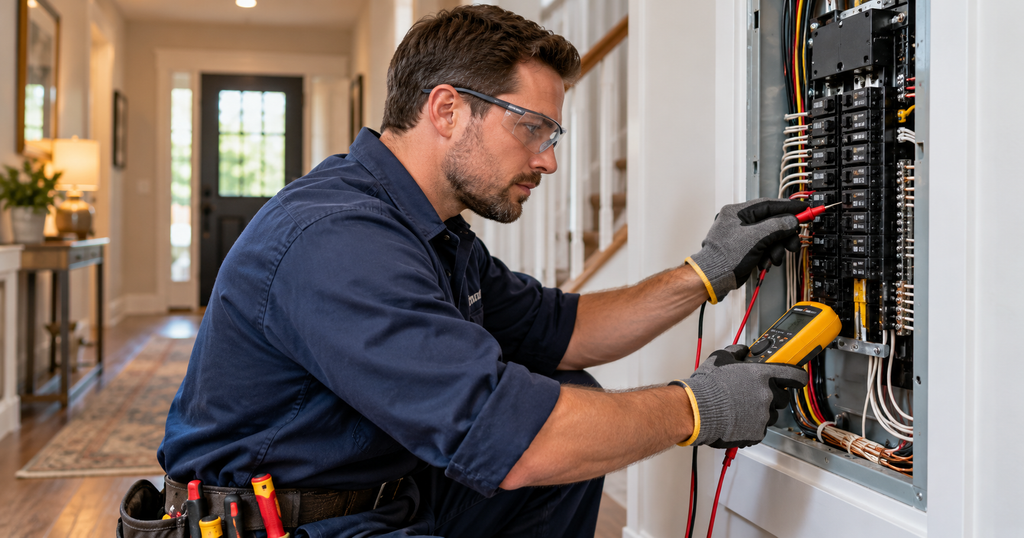
A qualified electrician can assess wiring condition, cable sizing, connections, and protective equipment. Replacing dangerous or defective wiring should primarily be regarded as a safety improvement rather than a guaranteed electricity-saving investment. Homeowners should never inspect energized circuits or modify concealed electrical installations without appropriate qualifications.
7. Changes in Household Size, Daily Routines, and Operating Hours
Household electricity consumption can increase gradually when everyday circumstances change. More people living at home, additional remote work, longer gaming sessions, frequent cooking, or increased use of heating and cooling equipment may raise energy demand without attracting immediate attention.
A home that previously remained empty during working hours may consume substantially more electricity when several family members begin working or studying remotely. Similarly, school vacations, overnight guests, or new household equipment can change consumption patterns.
Instead of assuming that an electricity increase reflects an equipment fault, compare the household’s current routine with previous months. Recording the approximate operating hours of major appliances can reveal changes that would otherwise be overlooked. This approach is especially useful when comparing periods with similar weather conditions.
How Much Do Common Appliances Add to Your Electricity Bill?
Estimating appliance electricity costs helps households identify where savings may be most worthwhile. The following examples assume a 30-day month and a hypothetical rate of $0.20 per kWh.
| Appliance | Daily operating time | Estimated monthly energy cost |
| Air conditioner, 1,000 W average input | 8 hours | $48.00 |
| Electric heater, 1,500 W | 4 hours | $36.00 |
| Gaming computer, 500 W average draw | 6 hours | $18.00 |
| Television, 100 W | 5 hours | $3.00 |
| LED bulb, 10 W | 5 hours | $0.30 |
These calculations assume the stated average power draw throughout the operating period. Actual costs depend on equipment efficiency, variable workloads, thermostat cycling, local tariffs, and additional charges.
The basic calculation is:
Monthly electricity cost = (Watts ÷ 1,000) × Daily operating hours × Number of days × Electricity rate per kWh.
For households using slab-based tariffs, the cost of additional consumption may differ from the average rate shown on the bill. Therefore, the applicable marginal rate should be considered when estimating potential savings.
A Practical Seven-Day Plan to Investigate High Electricity Bills
Households can investigate unexpected electricity charges systematically rather than making several costly changes at once. The following plan focuses on identifying the source of the increase before deciding what action is necessary.
- Day 1: Compare the last three electricity bills, including consumption and billing periods.
- Day 2: Review unit rates, applicable slabs, subsidies, and additional charges.
- Day 3: Identify high-power equipment, particularly heating, cooling, and gaming systems.
- Day 4: Compare appliance operating hours and changes in household routines.
- Day 5: Check accessible filters, appliance seals, and obvious air leaks.
- Day 6: Calculate major appliance costs and report unexplained meter discrepancies.
- Day 7: Prioritize practical improvements and record a baseline for future comparison.
This investigation may not resolve every issue within one week, particularly when seasonal changes or technical faults are involved. However, it helps distinguish between problems that require behavioral adjustments, billing clarification, equipment maintenance, or professional assistance.
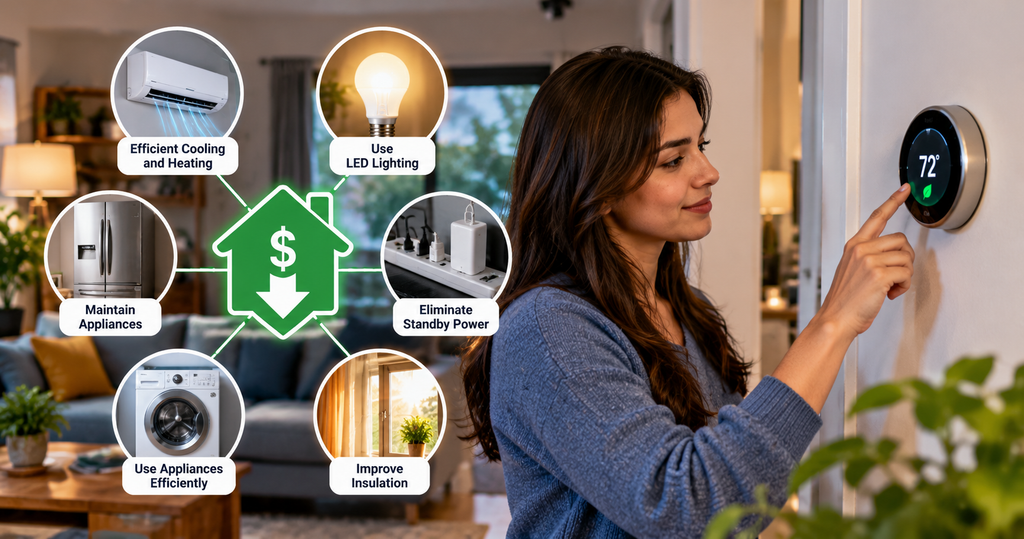
Final Thought: Understand the Cause Before Trying to Lower the Bill
The question “Why is my electric bill so high?” does not always have a simple answer. Higher tariffs, slab-based pricing, seasonal temperatures, powerful equipment, inefficient appliances, changing household routines, and occasional billing problems can all influence the amount payable. An expensive electricity bill does not necessarily indicate irresponsible consumption, which is why understanding its underlying causes matters more than making immediate assumptions.
The most effective response is to identify whether the increase comes from electricity consumption, pricing, or inaccurate billing before selecting a solution. Understanding the bill first, measuring electricity use second, and investing in improvements only when justified can help households avoid unnecessary expenses while maintaining comfort and safety. Although consumers cannot always control electricity prices, they can make better decisions about how efficiently they use the energy they purchase.
Author’s Note
This article is published by BusiPulse for general educational and consumer-information purposes. It does not constitute personalized financial, electrical engineering, energy-efficiency, or professional technical advice. Electricity tariffs, billing slabs, subsidy arrangements, safety regulations, and consumer protections vary across countries and service providers. Readers should consult their electricity providers or qualified professionals regarding billing disputes, meter problems, electrical faults, and major equipment changes. Calculations and tariff examples are illustrative and do not guarantee specific savings. Readers are not required to agree with every interpretation presented. BusiPulse aims to make economic, financial, technological, and everyday consumer issues understandable and practically useful to an international audience.